Explore

Every place worth walking to

Nine sites across one fortified plateau — medieval defences, two temple traditions, a mosque, water works and the gorge that shaped all of it. Each entry carries a short history and practical notes for a visit.

Gandikota FortHeritage

Gandikota Fort

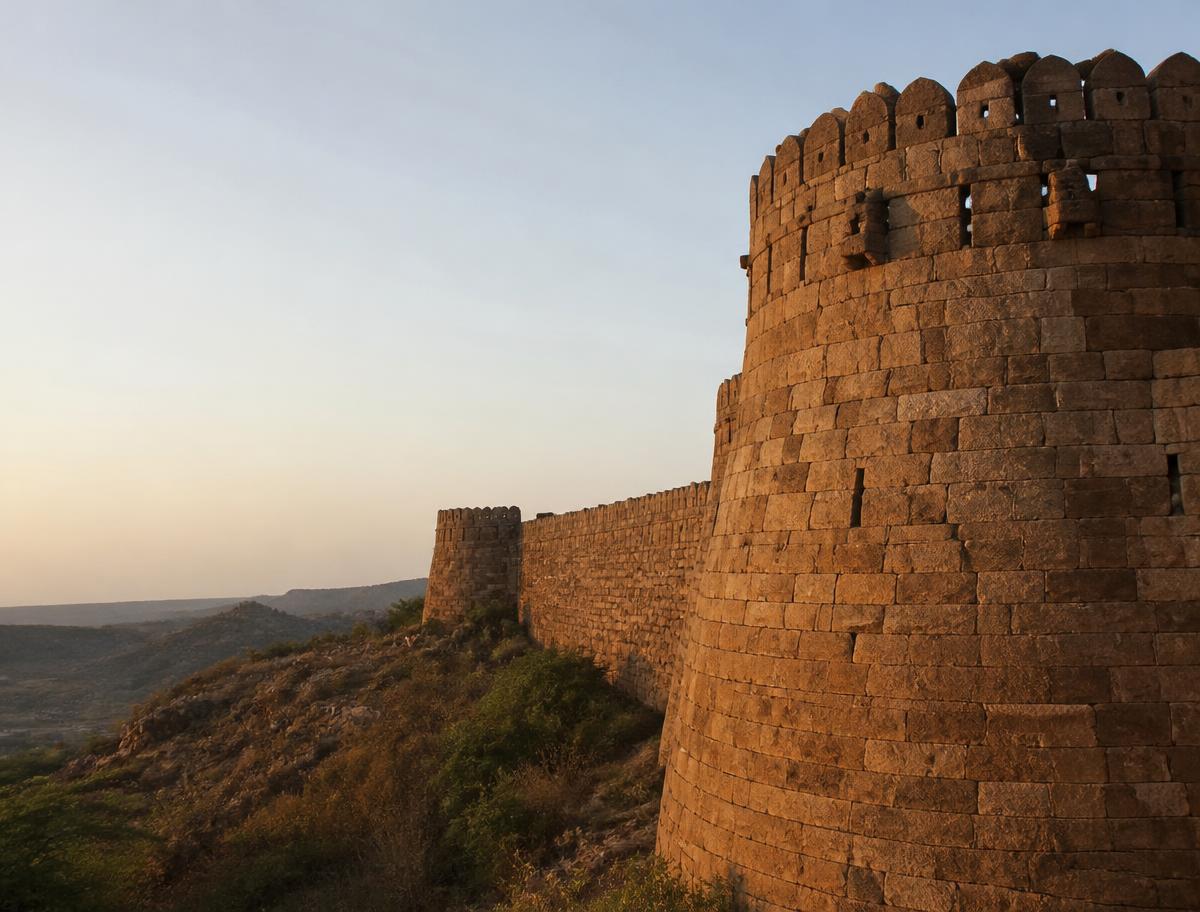
The fort crowns a granite plateau above the Penna gorge and was strengthened over centuries by successive Deccan powers, including a long and important Vijayanagara-era phase. Its walls follow the natural rock line, turning the cliff itself into a defence, and inside them stood a full settlement rather than a bare garrison.

Location
Gandikota village, Jammalamadugu mandal, Kadapa district, Andhra Pradesh.
Best time
Early morning or late afternoon

Visit notes

  • The walled area is large — allow 2 to 3 hours on foot.
  • Ground is uneven granite; wear closed, grippy shoes.
  • Little shade inside the walls, so carry water.
Madhavaraya TempleHeritage

Madhavaraya Temple

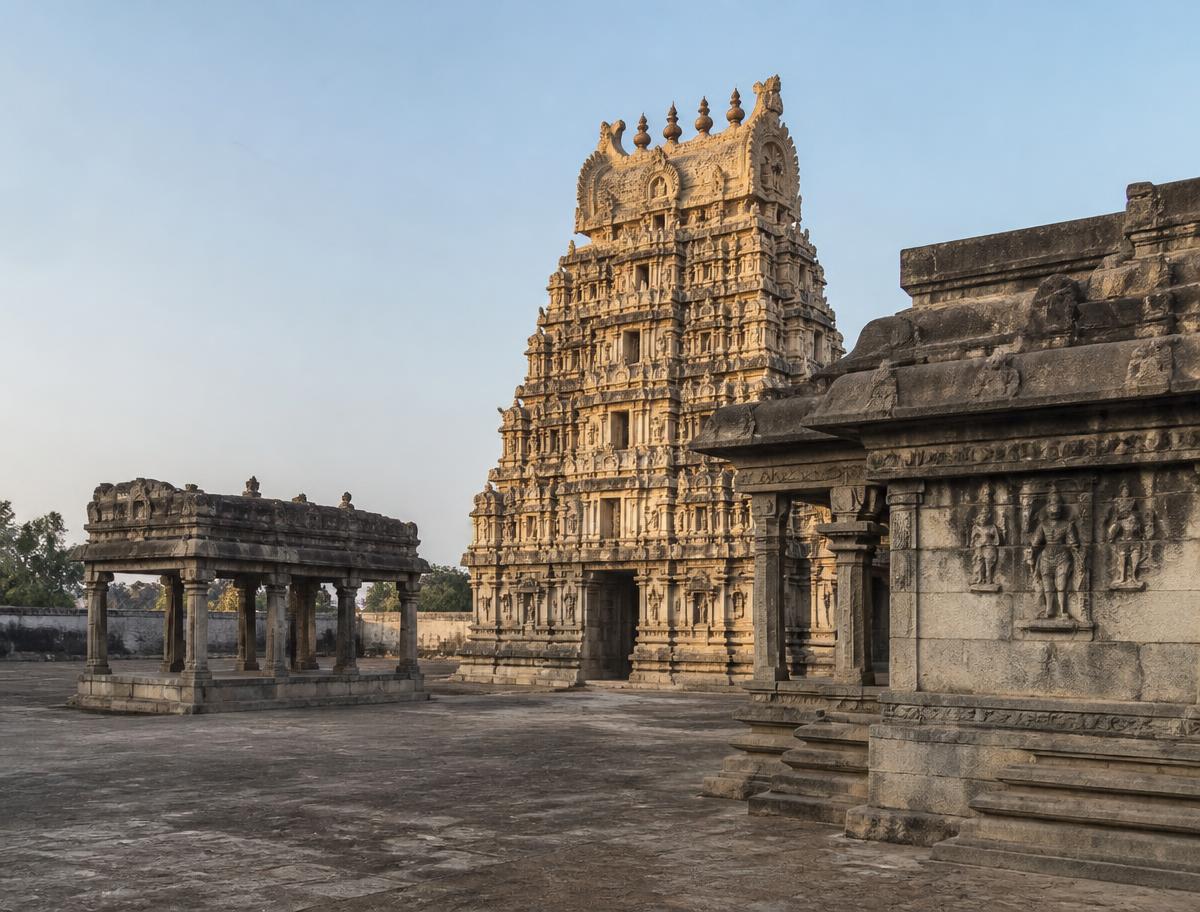
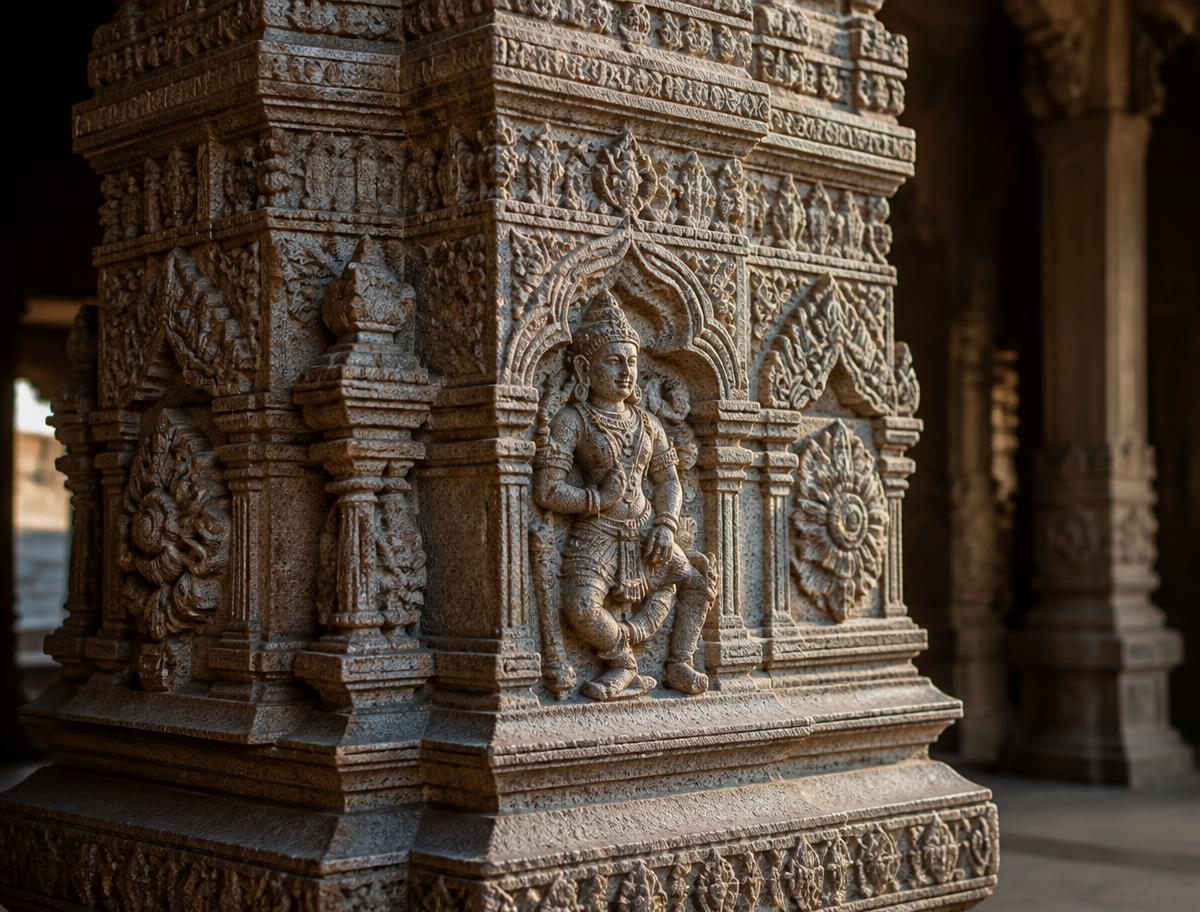
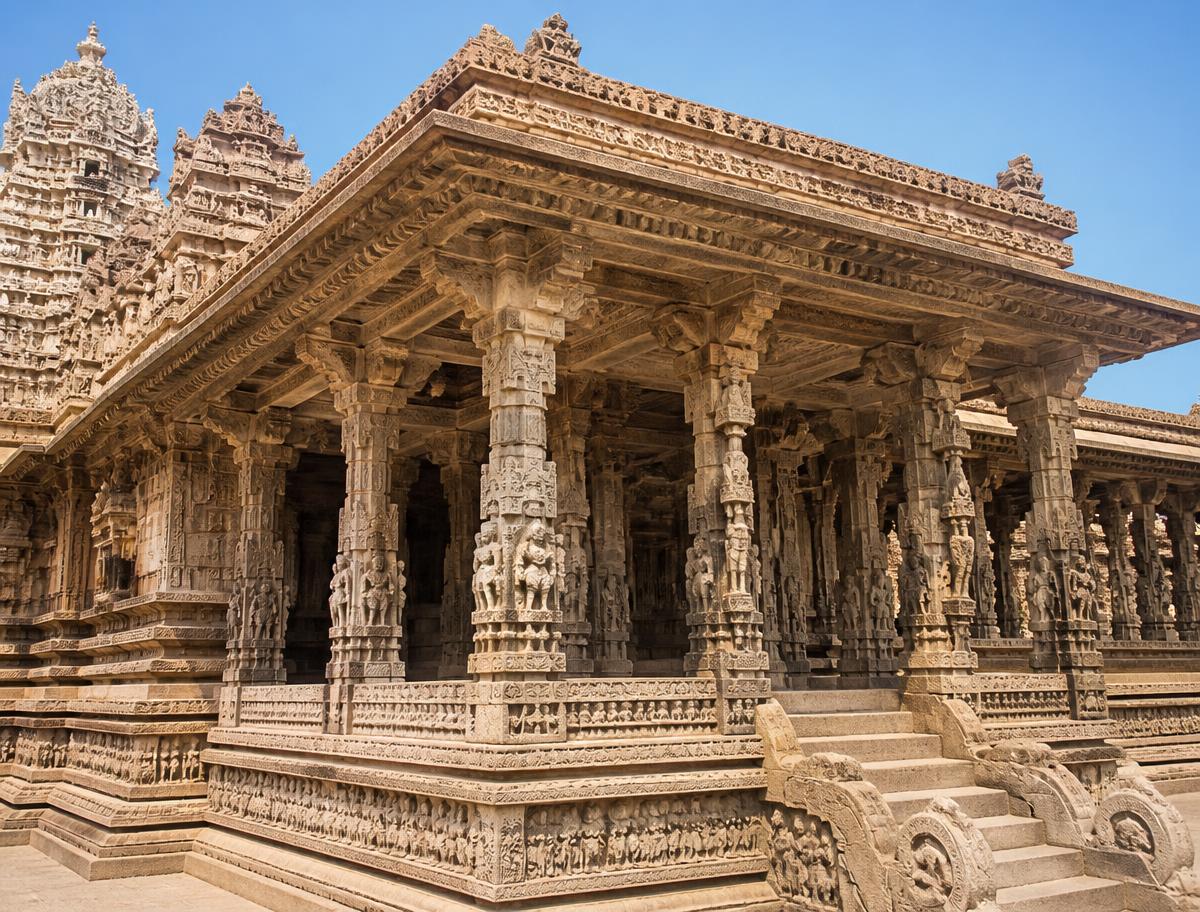
The most ornate temple inside the fort, built in the Vijayanagara idiom with carved granite pillars, figurative brackets and a pillared mandapa arranged around the shrine. Much of the superstructure is lost, which brings the carving unusually close to eye level.

Location
Inside the fort walls, a short walk from the main fort area.
Best time
Morning

Visit notes

  • Roofless in parts — visit outside the harshest midday sun.
  • Do not climb on plinths, pillars or carved surfaces.
  • Excellent for architectural photography in raking light.
Ranganatha Swamy TempleHeritage

Ranganatha Swamy Temple

A shrine dedicated to Vishnu as Ranganatha, more austere than Madhavaraya, with plainer surfaces and compact courtyards. It shows how sacred and civic space coexisted inside one fortified settlement.

Location
Within the fort complex, near the temple precinct.
Best time
Morning

Visit notes

  • Still a place of belief for local visitors — keep noise low.
  • Remove footwear where indicated and follow local instruction.
  • Photography practice varies; ask before shooting interiors.
Jama MasjidHeritage

Jama Masjid

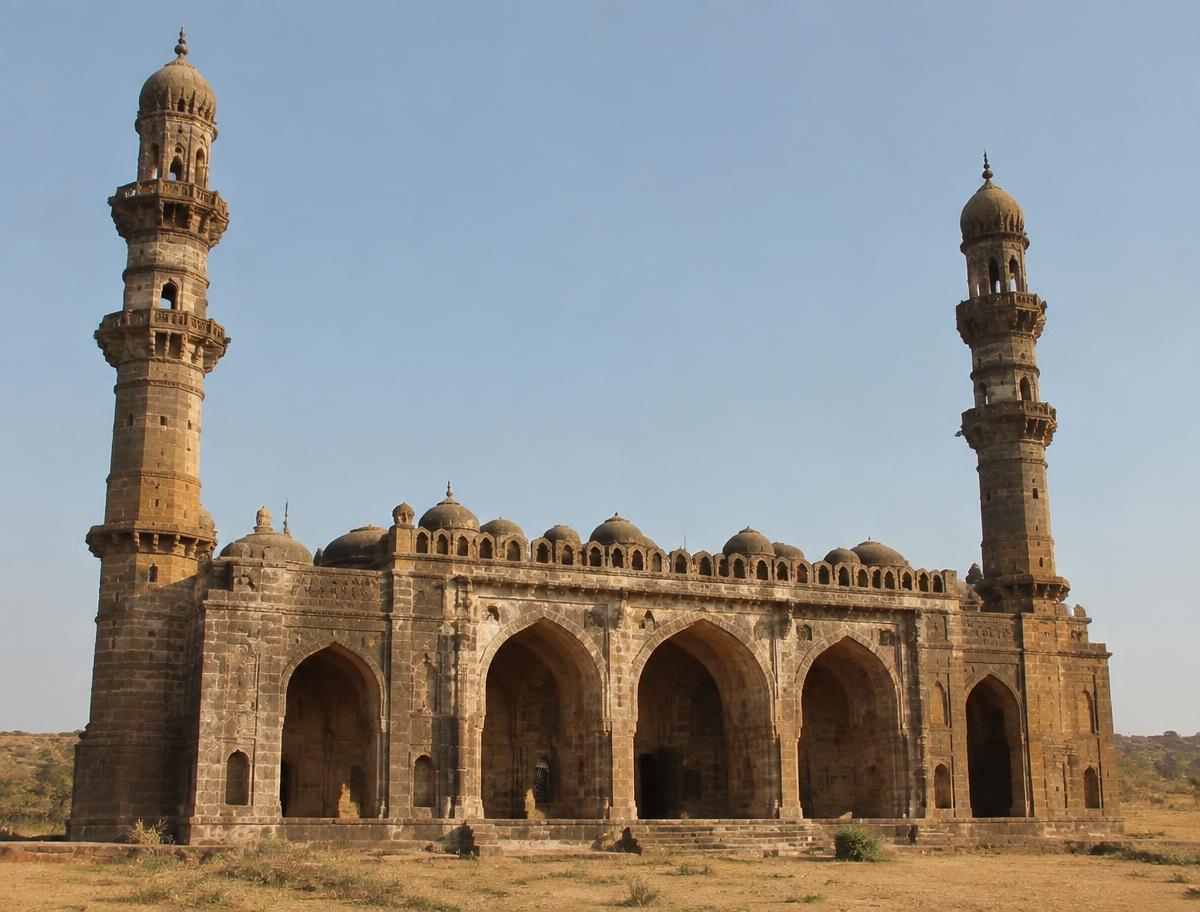
A large mosque inside the fort, dating from the period when Gandikota was held by Deccan sultanate rulers. Its arched prayer hall and tall minarets stand a short distance from the Hindu temples, making the fort a rare place to read two architectural traditions side by side within a single enclosure.

Location
Inside the fort, close to the Madhavaraya temple precinct.
Best time
Morning to mid-afternoon

Visit notes

  • Dress modestly and enter quietly.
  • The interior is bare stone — an excellent study of arch and dome construction.
  • Pairs naturally with the temple walk in one loop.
Gandikota CanyonNature

Gandikota Canyon

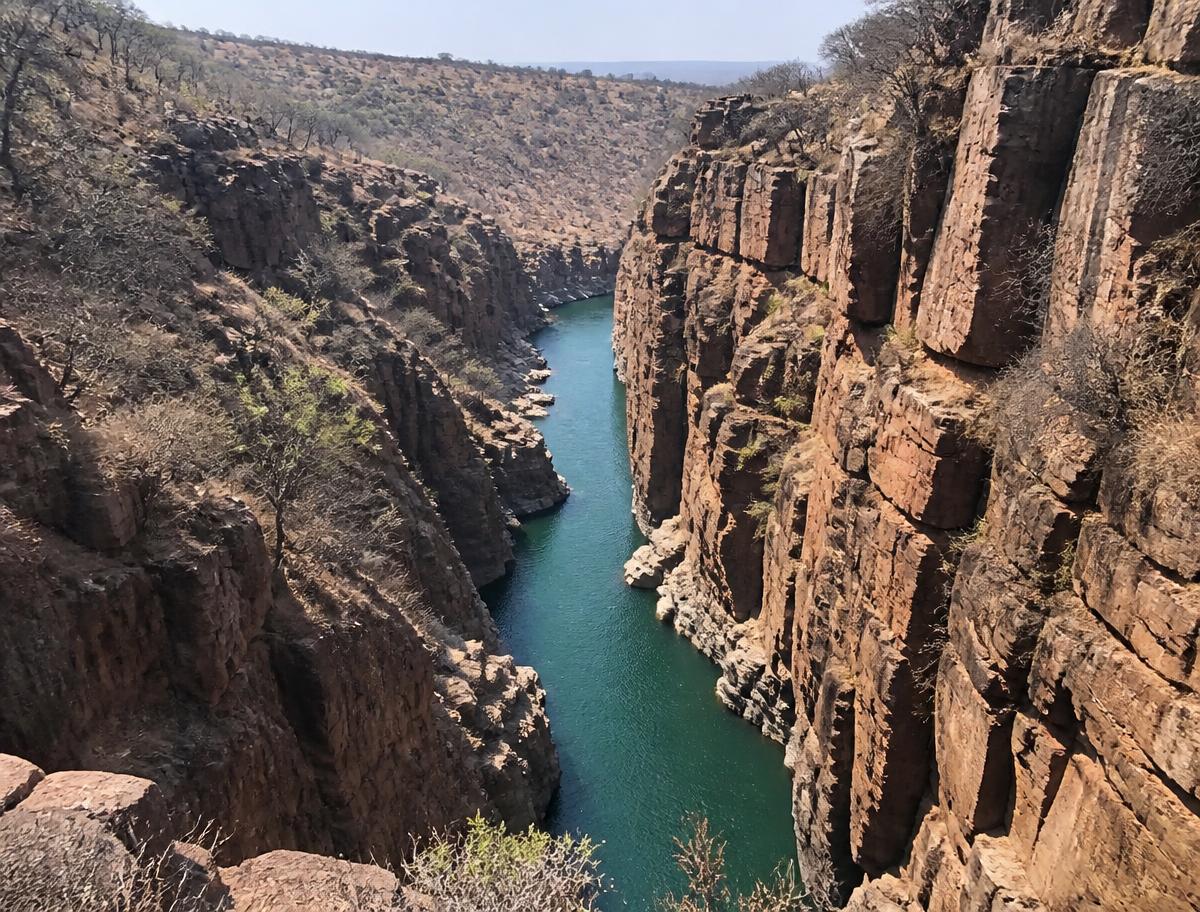
The gorge is the reason the site exists: the Penna river cut a deep passage through the Erramala hills, leaving sheer granite walls that made the plateau above almost impossible to attack. The name Gandikota is commonly traced to this gandi, the narrow gap in the hills.

Location
Along the eastern rim of the fort plateau.
Best time
Sunrise and sunset

Visit notes

  • Edges are natural rock with no railings — stay well back.
  • Do not attempt to climb down the cliff faces.
  • Wind can be strong at the rim; secure hats and phones.
Penna RiverNature

Penna River

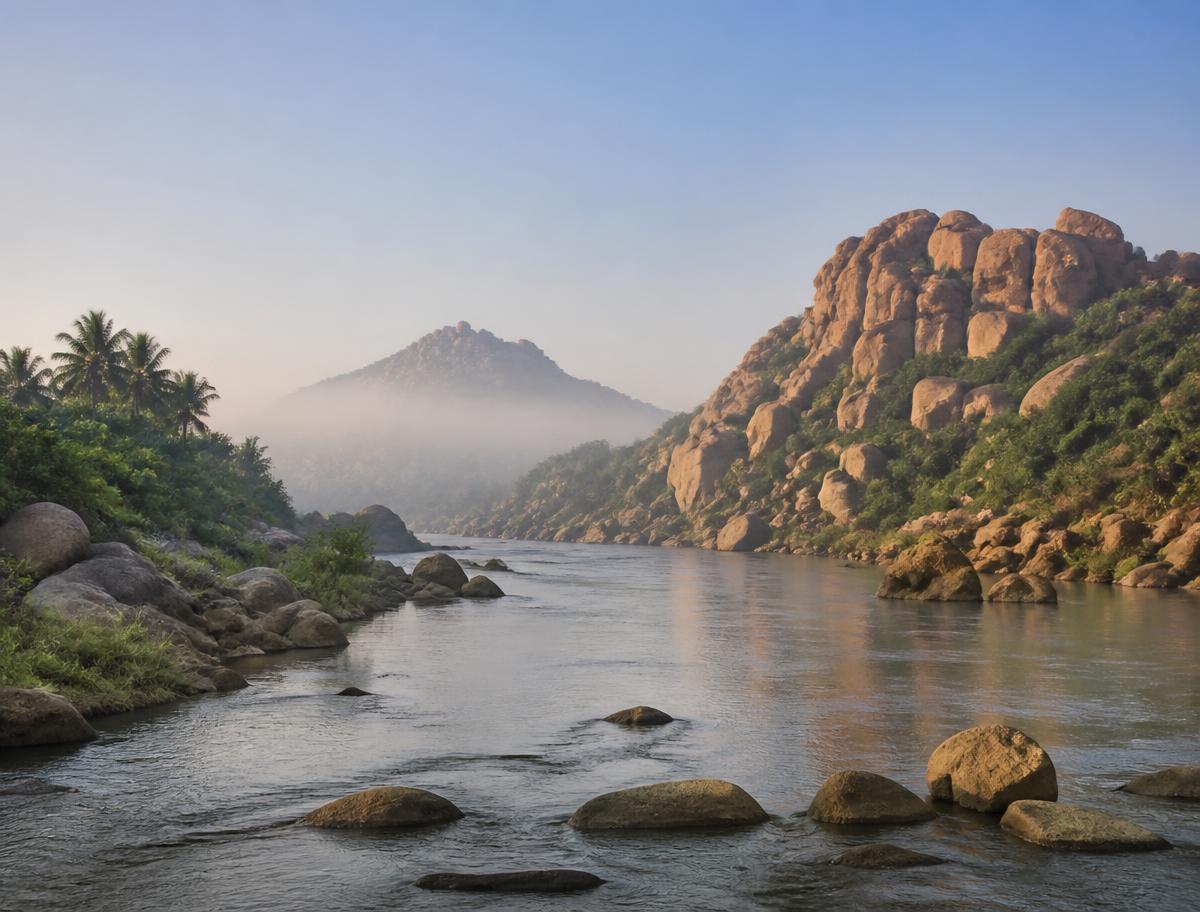
The Penna (Pennar) rises in Karnataka and flows east across the Deccan. At Gandikota it is squeezed between rock walls, and over an immense span of time this narrow, fast flow carved the canyon that defines the site.

Location
At the base of the canyon, below the fort plateau.
Best time
Early morning for mist and calm water

Visit notes

  • River access and water level change with the season.
  • Follow local guidance; do not swim in unknown stretches.
  • The best river views are from the rim rather than the bank.
Gateways & RampartsArchitecture

Gateways & Ramparts

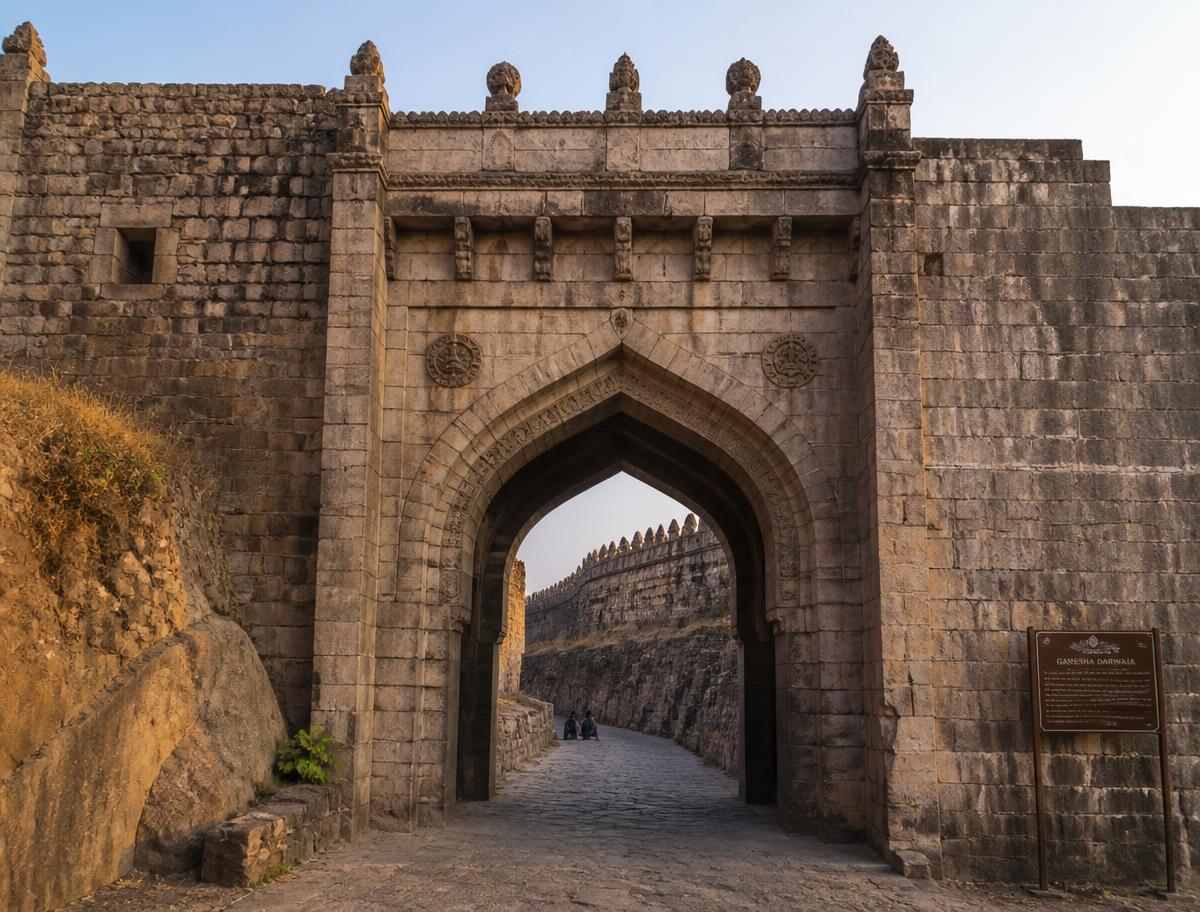
Arched gateways, curtain walls and rounded bastions controlled every approach to the plateau. The design is defensive engineering as much as architecture — angled entries, thick masonry and raised platforms that always favoured the defender.

Location
Along the fort's approach road and perimeter walls.
Best time
Late afternoon

Visit notes

  • Walk through at least one gateway to sense the original scale.
  • Watch your footing on worn stone paving.
  • Great frames for photography in low sun.
Granaries, Tanks & Palace RuinsArchitecture

Granaries, Tanks & Palace Ruins

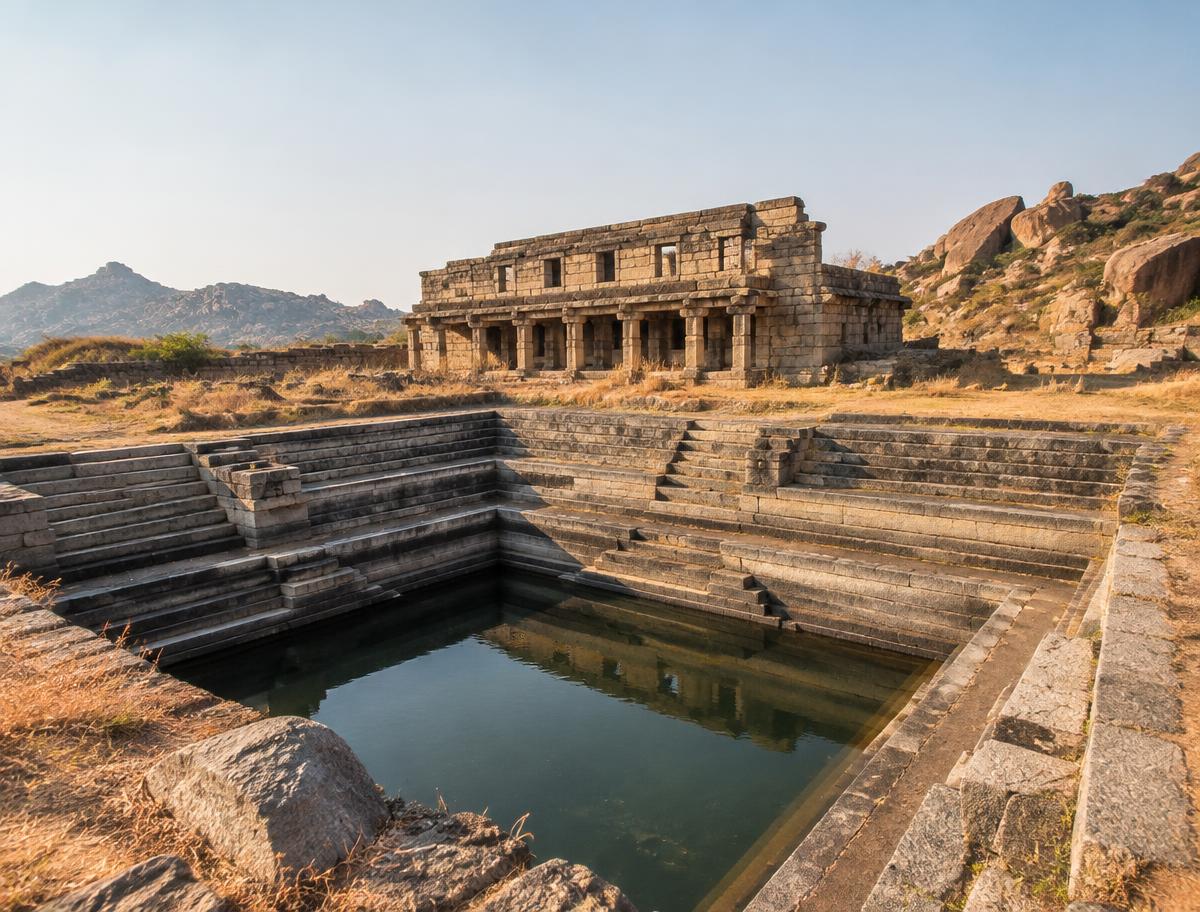
Stepped water tanks, granaries, magazines and residential ruins are scattered inside the walls. They are the least photographed part of Gandikota and the most revealing: they show how a fortified community stored water and food well enough to survive a siege.

Location
Spread across the interior of the walled area.
Best time
Any daylight hour

Visit notes

  • Structures are unrestored — do not enter unstable ruins.
  • Tank edges can be slippery; keep children close.
  • Look for cut-stone channels that once moved water across the site.
Stone Carving & Craft DetailArchitecture

Stone Carving & Craft Detail

Gandikota's granite carving ranges from bold structural blocks to fine floral and figurative bands. Studying the detail is the clearest way to date and distinguish the site's building phases.

Location
Best seen on temple pillars and mandapa bases inside the fort.
Best time
Golden hour

Visit notes

  • Never touch, rub or chalk carvings to make them visible.
  • A zoom lens shows more than climbing closer ever will.
  • Side light in the first and last hours reveals the most relief.

Orientation

How the sites sit together

A stylised layout of the plateau — not a navigation map. Select a marker to read what stands there. Use a live map service for directions on the day.

Illustrative layout · not to scale

Heritage

Gandikota Fort

Ramparts, bastions and the walled settlement area.

A suggested walking order

  1. 1

    Enter through the fort gateway and follow the rampart line.

  2. 2

    Walk the temple precinct: Madhavaraya, then Ranganatha Swamy.

  3. 3

    Cross to the Jama Masjid — a few minutes on foot.

  4. 4

    Loop past the granaries and stepped tanks inside the walls.

  5. 5

    Finish at the canyon rim viewpoint for the gorge and the Penna.

  6. 6

    Stay for sunset, then leave before the light goes completely.

Timings, ticketing and on-site facilities are not published here because they change — please verify locally before you travel.