Heritage

Stone, walls and worship

Gandikota's built fabric was assembled over centuries rather than in one campaign — defences follow the rock, temples fill the interior, and a mosque stands within the same enclosure.

Gandikota Fort

Fort

Gandikota Fort

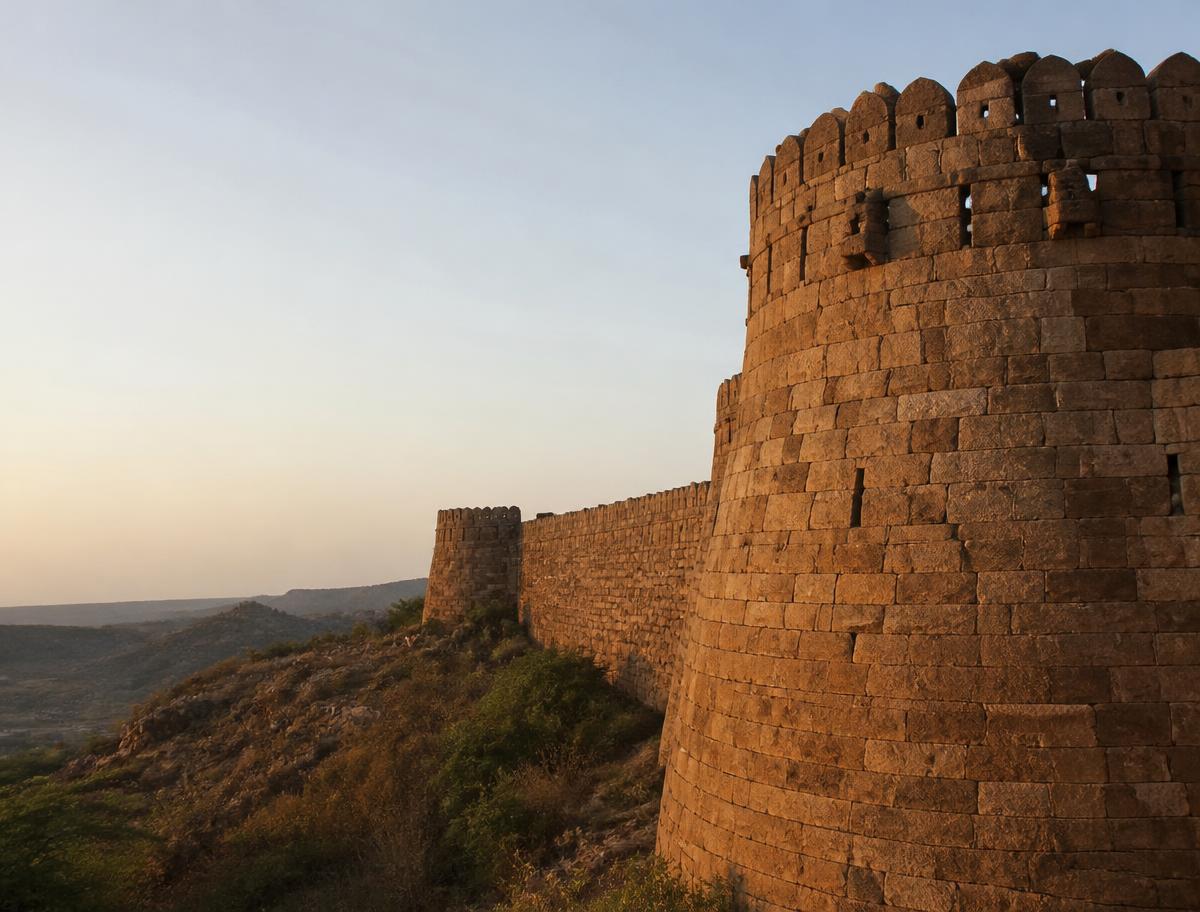
A vast hill fort spread across the granite plateau above the Penna gorge, with long ramparts, bastions and ruined halls inside.

The fort is the heart of Gandikota. Its walls follow the natural contours of the rock, using the cliff itself as defence on the river side. Inside the walls you can still walk past granaries, magazines, stepped tanks and residential ruins that hint at a settlement that lived within the fortification.

Explore More
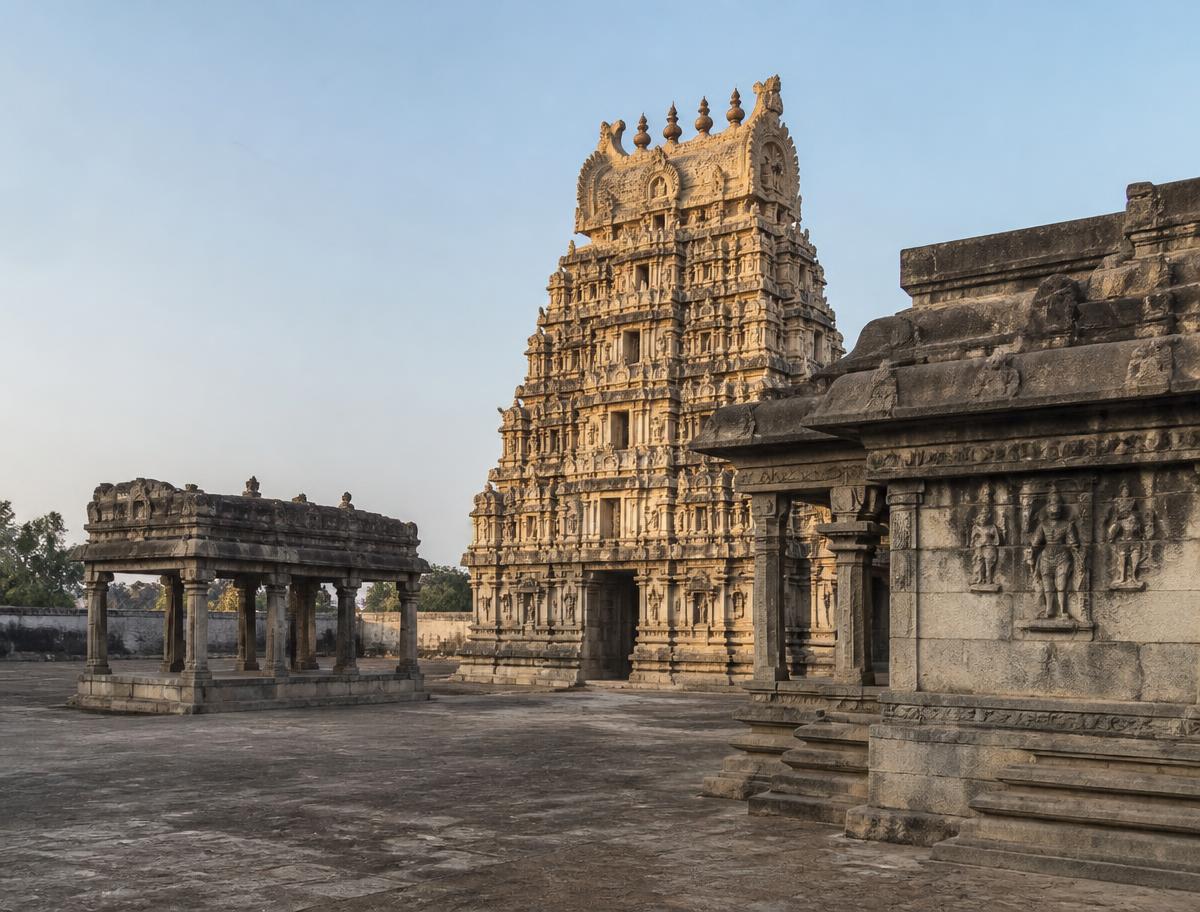
Madhavaraya Temple

Temple

Madhavaraya Temple

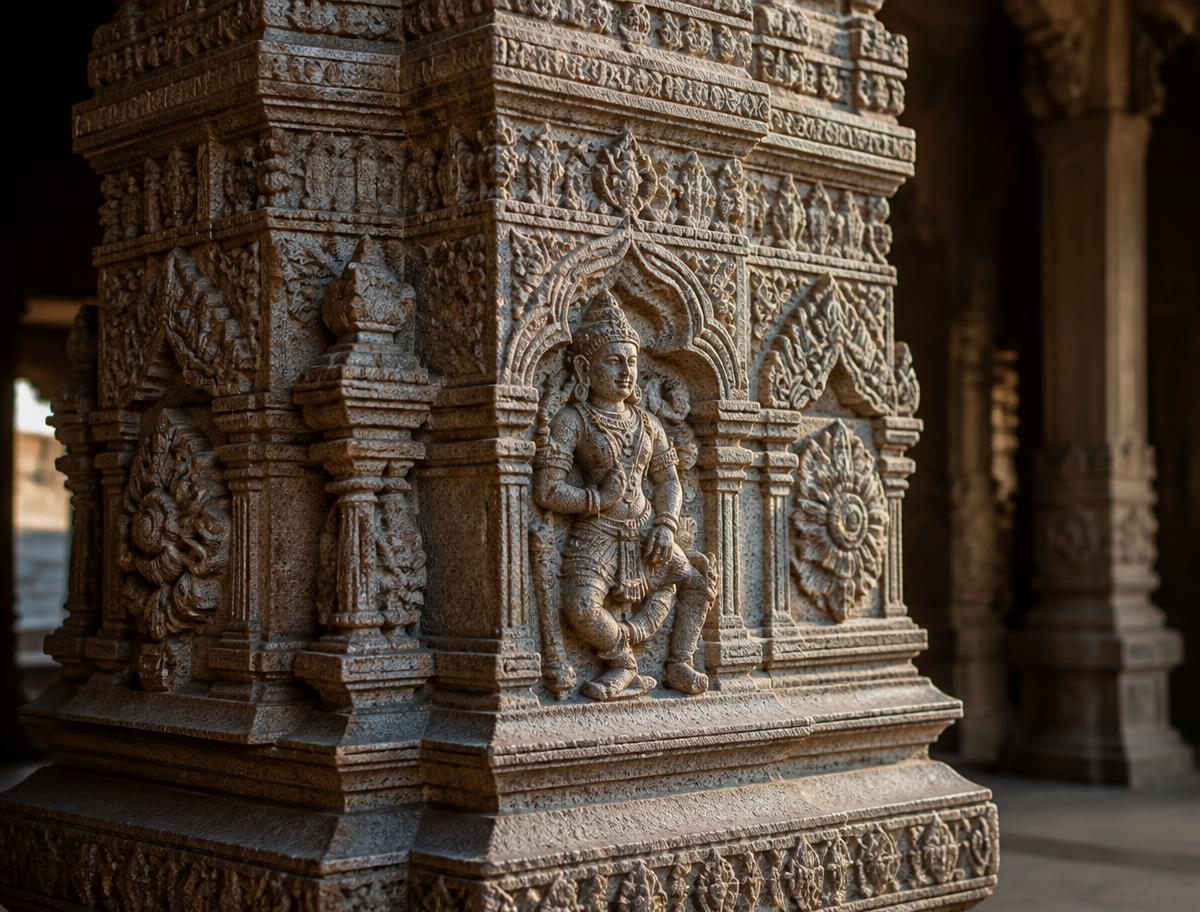
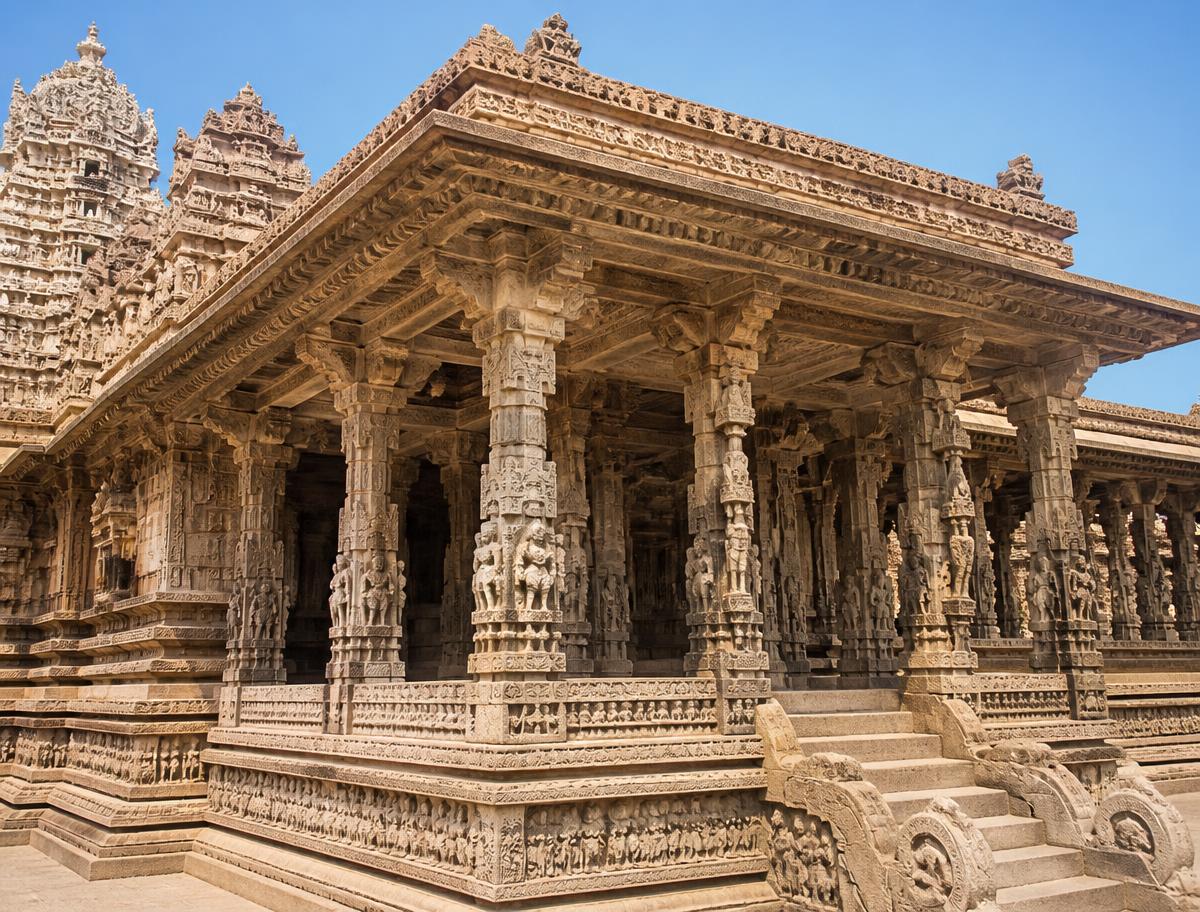
The most elaborate temple inside the fort, known for its carved pillars, mandapa and layered stone ornamentation.

Madhavaraya Temple shows the Vijayanagara sensibility for carved granite: figurative brackets, floral bands and pillared halls arranged around the shrine. Much of it stands roofless today, which makes the carving unusually easy to read up close.

Explore More
Ranganatha Swamy Temple

Temple

Ranganatha Swamy Temple

A quieter shrine within the fort complex, dedicated to Vishnu as Ranganatha, with a simpler and more austere plan.

Compared with Madhavaraya, this temple is restrained — plainer surfaces, compact courtyards and a calm interior. It is a good place to understand how sacred and civic spaces sat side by side inside a fortified settlement.

Explore More
Ancient Gateways & Walls

Architecture

Ancient Gateways & Walls

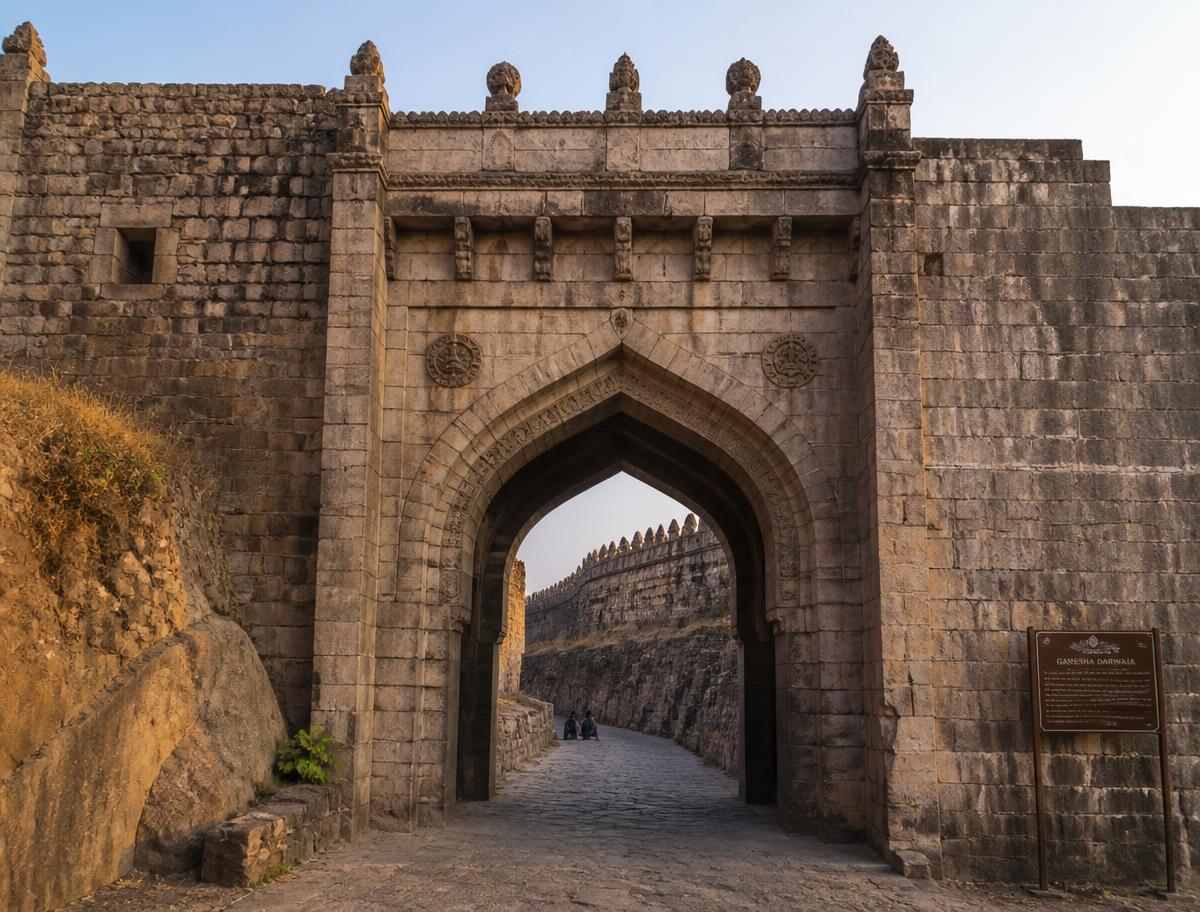
Arched stone gateways, curtain walls and rounded bastions that once controlled every approach to the plateau.

The gateways are engineering as much as architecture: angled approaches, thick masonry and elevated platforms that gave defenders the advantage. Walking through them is the clearest way to feel the scale of the original fortification.

Explore More
Fort Architecture & Stone Craft

Architecture

Fort Architecture & Stone Craft

Granite masonry, carved pillars, water structures and mosque-and-temple architecture standing within one enclosure.

Gandikota's built fabric mixes traditions — temple mandapas, a mosque, palace ruins and utilitarian water works. Together they document centuries of layered occupation rather than a single moment of construction.

Explore More

Timeline

How Gandikota came to be

A broad sequence rather than exact dates — the site changed hands often, and scholarship continues.

  1. Early period

    A natural stronghold

    The gorge cut by the Penna river creates a defensible plateau. The name Gandikota is commonly linked to this 'gandi' — the gorge or narrow gap in the hills.

  2. Medieval period

    Fortification grows

    Successive rulers strengthen the site into a major hill fort, extending walls, gateways and bastions along the natural rock line.

  3. Vijayanagara era

    Temples and civic life

    Temple building and settlement inside the walls peak, leaving carved granite mandapas, tanks and granaries that survive today.

  4. Later centuries

    Changing hands

    The fort passes through several regional powers before losing military importance, after which the settlement gradually thins out.

  5. Today

    Heritage destination

    Gandikota is visited for its ruins and its canyon together — a site where archaeology, landscape and local life overlap.